
Android 13 review: The update we need, not the one we want
Iterative improvements refine the big update that was Android 12
Readers like you help support Android Police. When you make a purchase using links on our site, we may earn an affiliate commission. Read More.
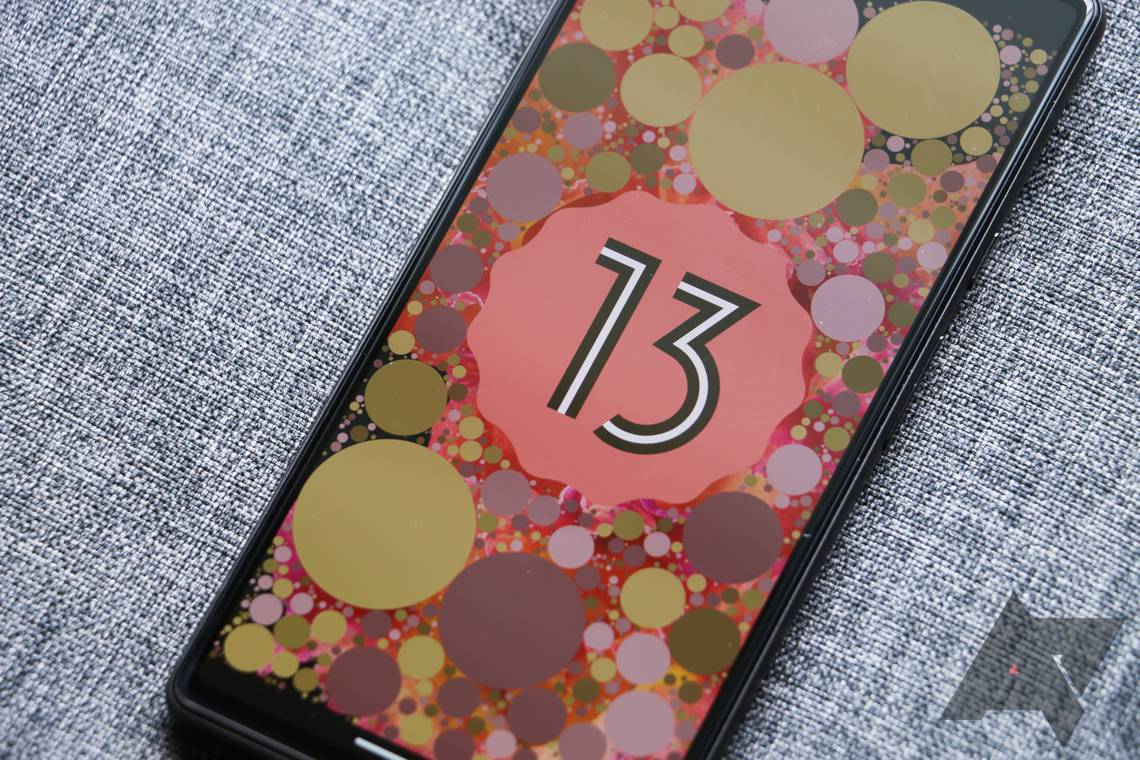
As we all look forward to this year's big next release, Android 14, we shouldn't forget about what's currently running on our phones in a stable version. Android 13 came out in August 2022, and only shortly after, the Google Pixel 7 Pro and the smaller Google Pixel 7 were the first phones to launch with the new OS
ASSSSSSSSSSSSSSSSSSSSSSSSSSSSSSSSSSSSSSSSSSSSSSSSSSSSSSSS
In contrast to Android 12, the new release offered only a few tangible improvements and focused more on fixing up little bits and pieces here and there. That's understandable, as Android 12 was one of the biggest updates in years, complete with a new theming engine that adjusts to your wallpaper. Like Android 12L, Google's tablet and foldable-focused mid-term update, Android 13 is less exciting. However, it still comes with some select quality-of-life improvements for Android phones eligible for the OS update.
Don't get me wrong, though. After the big, busy, and controversial release that was Android 12, it's good that we get some breathing room and a period of settling in. Android 13 doesn't fundamentally change how Android looks and feels, but instead goes back to a more iterative approach in trying to refine what Google unleashed in Android 12, with thoughtful and great underrated features.
ASSSSSSSSSSSSSSSSSSSSSSSSSSSSSSSSSSSSSSSSSSSSSSSSSSSSSSSS
Before I dive into the review, remember that this is a look at what Android is like on the latest Pixel phone, including the Google Pixel 6 and Google Pixel 7. While underlying features like new permissions, privacy changes, and API tweaks also made their way to other phones, a lot of the things talked about here are only truly visible on Google Pixel phones. This updated review will also cover what's new in Android 13's Pixel Feature Drops, three bigger updates that have reached the Pixel phones since release.
Android 13: Design and interface
Material You evolution
Android 12 introduced Material You, Google's latest iteration of its Material design language. The Material You update completely upends how app design usually works. Instead of designers carefully crafting which color palette to use for their apps, Material You pulls a dynamically generated set of colors from your wallpaper, creating possibly the most flexible and personal interface in any app that supports it.
ASSSSSSSSSSSSSSSSSSSSSSSSSSSSSSSSSSSSSSSSSSSSSSSSSSSSSSSS
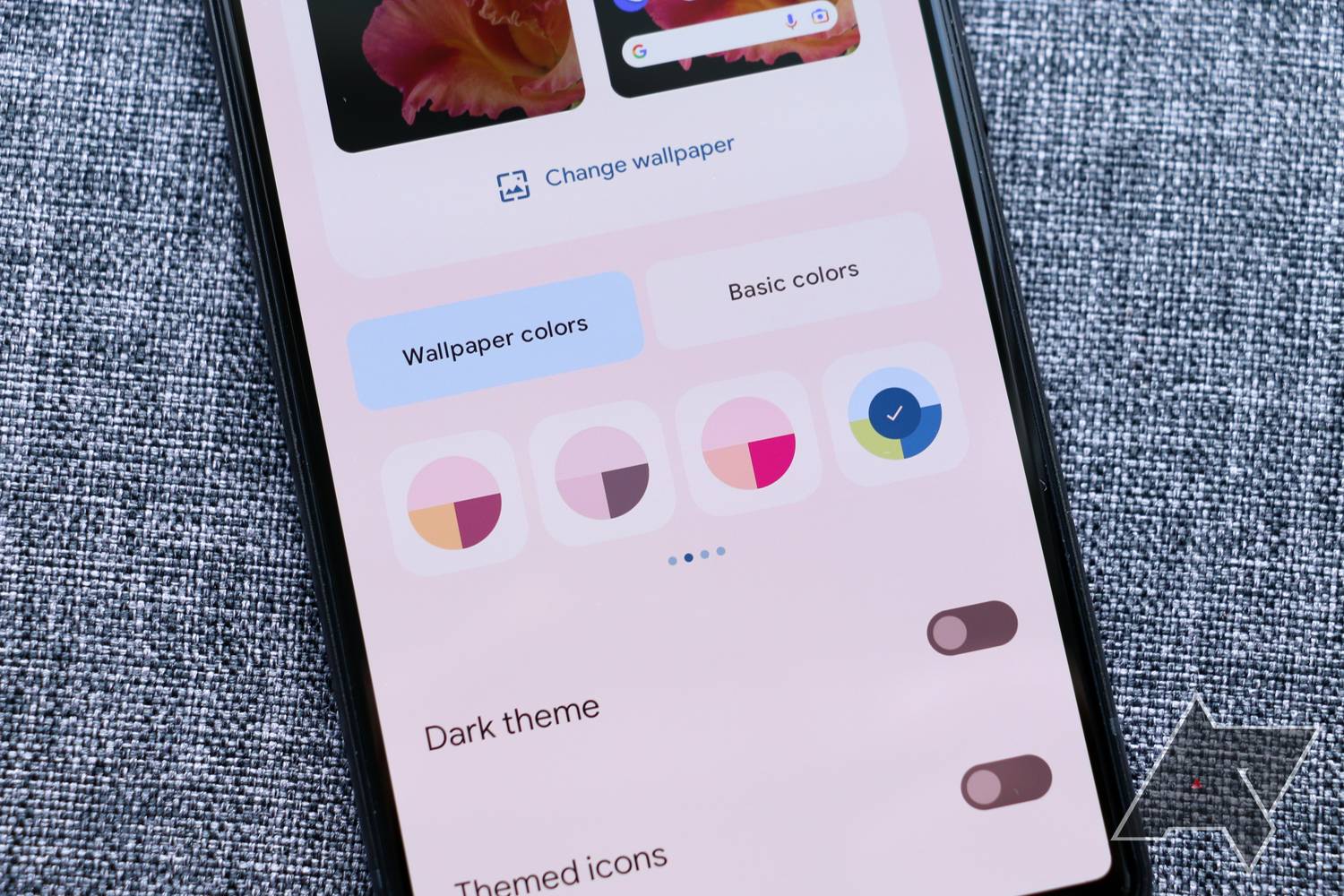
Android 13 doesn't outright fix any of the underlying issues with the new design language, but it builds on top of what Android 12 introduced and refines certain aspects. Most notably, Android 13 offers many more extracted colors to pick from, giving you up to 16 different color themes from one wallpaper. This gives you a lot more flexibility in changing your interface colors without switching wallpapers, and it is a much-needed push in the right direction. All this is accessible from the Wallpapers & Style settings on the home screen.
ASSSSSSSSSSSSSSSSSSSSSSSSSSSSSSSSSSSSSSSSSSSSSSSSSSSSSSSS
Like Android 12, Android 13 also lets you turn on themed icons for your home screen, which builds on top of what the first release brought. However, Android 13 is the first Android version to bring themed icon support to third-party apps, so you're finally no longer limited to themed Google apps. In theory, this is supposed to dunk all the apps on your home screen into the same wallpaper-based background and foreground colors, leaving you with a uniform-looking design.
I initially feared that third-party developers would be reluctant to implement support as they might want to retain their brand colors, but I'm positively surprised how many prominent developers have already jumped on board. WhatsApp, Twitch, Spotify, Reddit, Microsoft Edge, LinkedIn, Bitwarden, 1Password, PS Remote Play, Pocket, VLC, Pinterest, Signal, and Telegram all already support the new system. There are so many apps that we had to create a separate overview of which apps support themed icons on Android 13. At this pace, a full Material You look without compromising on which apps to add to your home screen doesn't seem out of reach anymore.

Since themed icons will remain opt-in for a long time, we might still have to wait until this theming option becomes truly ubiquitous. Google hasn't exactly led by example, either. Some Google apps only offer themed icons on the Pixel Launcher, while other Android 13 handsets are left in the cold. That's the case for Home and Podcasts, for example. And on its own phones, its new Wallet app initially came without a themed icon and only received one later. Apps like Authenticator, Rewards, and YouTube Studio still haven't received a themed icon, not to mention Stadia.
ASSSSSSSSSSSSSSSSSSSSSSSSSSSSSSSSSSSSSSSSSSSSSSSSSSSSSSSS
I'm also sad that Google hasn't brought back custom app icon shapes and fonts. This was one of the staple customization options in Android 11, and if it's done correctly, it wouldn't even clash with Material You. Other phone manufacturers and third-party launchers still allow you to customize these things, but Google seems to have decided not to offer this capability anymore.
System UI changes
Apart from all the Material You color magic, Google made a few more tweaks to the system interface. The new, bolder navigation bar will probably be the most obvious one when you update from Android 12. Unfortunately, it doesn't really serve any purpose apart from aesthetics, and it takes up ever so slightly more vertical space than the smaller navigation bar first introduced in Android 10. It now resembles iOS' navigation bar more closely, though it's still not as long and thick as the alternative on the iPhone.
ASSSSSSSSSSSSSSSSSSSSSSSSSSSSSSSSSSSSSSSSSSSSSSSSSSSSSSSS
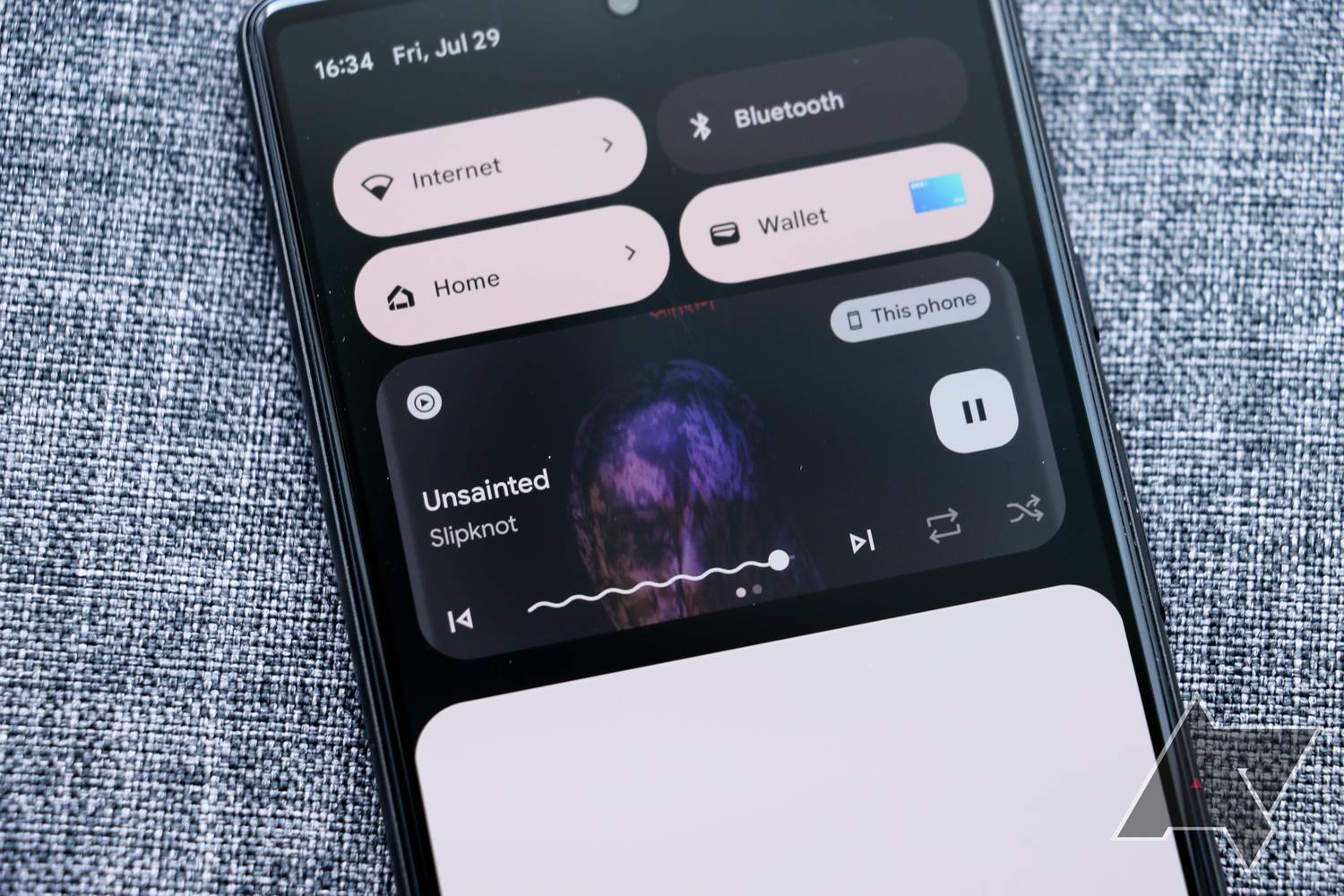
A more substantial tweak comes to the media player living in the notification shade and on the lock screen. Apart from some minor reshuffled button placement, you'll notice that the seek bar is now squiggly for the audio you've already listened to. While it's visually not the most pleasing thing to me, it serves a purpose. It only squiggles when you're actively listening, which allows you to see at a glance if audio is running. That's particularly handy when you just want to check if you forgot to turn your music off at low volumes or when you're about to put your headphones away. The media player saw a miniscule change in Android 13's December Feature Drop, and now features a horizontal bar instead of a dot for scrubbing.
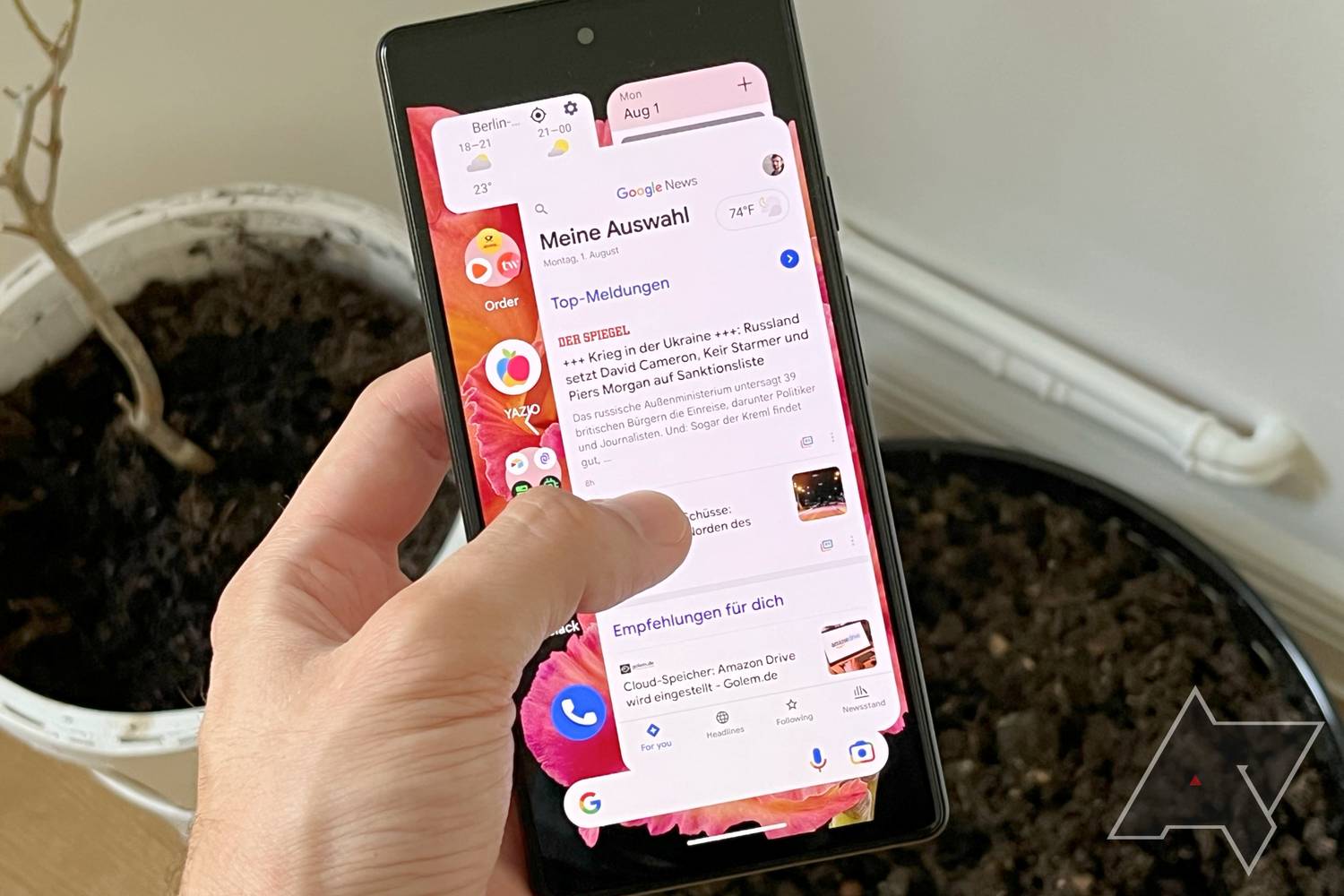
Google is also laying a foundation for a tweak to back gestures, though this will only go live with the subsequent release, Android 14. When the next backward navigation brings you to the home screen, you will get an animation similar to what you see when you swipe up from the bottom to go home, with the app window increasingly getting smaller and closer to the corresponding icon on the home screen. This is supposed to better indicate when you're about to leave an app. To enable this behavior, you need to activate your Pixel's developer options and toggle on predictive back animations. The only apps I spotted working with so far are Google News and the system settings
The Pixel Launcher's new search experience
The Pixel Launcher doesn't enjoy many visual changes compared to Android 12. It revamps how search works yet again, though. On Android 12, tapping the search bar on the home screen would bring you right to the Google app for search, while the search bar in the app drawer was focused on local results like apps, contacts, settings, and in-app content. Android 13 unifies the look and feel of both search experiences again, but they still remain slightly different.
ASSSSSSSSSSSSSSSSSSSSSSSSSSSSSSSSSSSSSSSSSSSSSSSSSSSSSSSS
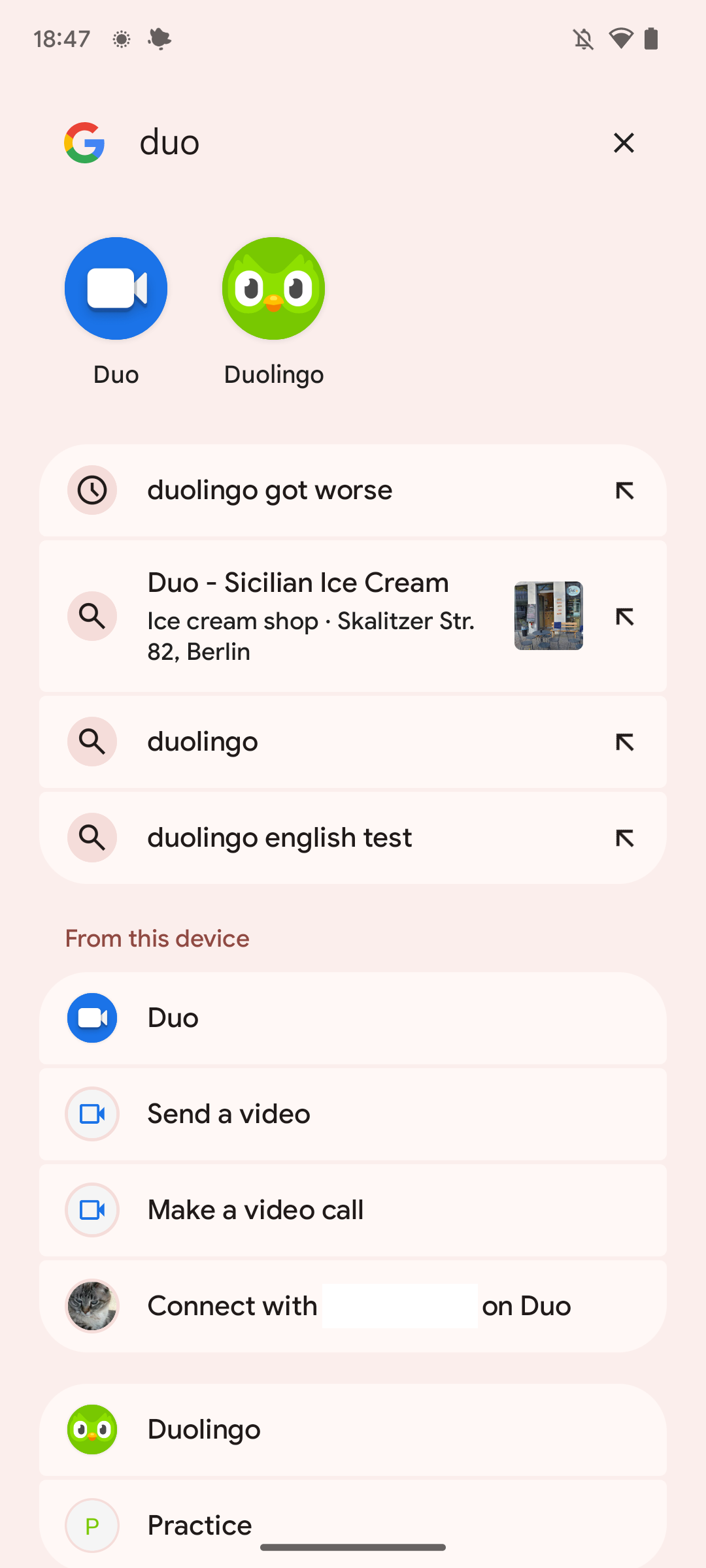
Spot the subtle but big difference: two pairs comparing home screen search on the left and app drawer search on the right
When the new experience does show up on your phone, tapping the search bar on the home screen brings up a Material You-themed interface that shows you a row of suggested apps at the top and a list of recent Google search terms below it. When you start to type, the interface is populated with app and web search results. Only hitting a suggestion/result or the search button on the keyboard will hand you off to the Google app. This makes for a smoother transition between the home screen and the search interface, and I like what Google has done here. It feels much more refined than just using the search bar as a widget that opens the Google app upon tapping it. Using this search experience on the initial version of Android 13, you can only find web results and apps, though — no other on-device search is possible here.
The search that opens when you swipe up on the home screen and open the app drawer is slightly different. When entering it, you will still see the familiar collection of all the apps you've installed on your phone, but once you start typing, the interface looks more like the one you get via the search bar on the home screen, with app suggestions at the top and a list of Google search suggestions below it. However, you can scroll further down here for more, revealing a "From this device" section. Here, you can see results like in-app shortcuts, settings shortcuts and toggles, and options to search for terms within apps (Search on YouTube, Search on Google Maps, etc.).
A Pixel phone displaying Android 13's home screen search interface.
Following the initial publication of this review, Google tweaked this behavior and made the two search bars behave almost the same way. You can now find contacts, apps, and shortcuts when searching with the search bar on the home screen, too, though they're pushed much further below than in the app drawer search. It's a good compromise and makes it easier to find what you need, regardless of which search option you use.
There are still some regressions compared with Android 12 and iOS, though. For example, when you want to use the keyboard to search for and then open an app, you can no longer simply hit enter/search to open the first app listed. Instead, you have to tap its icon at the top. Otherwise, you will end up doing a Google search for whatever phrase you entered. If you routinely do this, prepare for loads of searches like "mes" or "gma" in your search history when you just wanted to open Messages or Gmail. I would have preferred for Google to retain this "enter equals open app" behavior in the app drawer, as it adds more friction and makes you stretch your thumb all the way to the top of the screen again just to open an app. Thankfully, it looks like the company is exploring bringing back this behavior with Android 13's March 2023 Feature Drop.
I was initially displeased with how Google handled the separation between the two search bars, but the situation has gotten a lot better following the initial release.
Android 13: Improved privacy features
Privacy is a difficult concept on Android. After all, Google is an advertising company that lives off the data people share with it. But the company is still trying to make the process more transparent and make it harder for bad actors and malware to access data that isn't needed. Google will likely never go as far as Apple went with the "Ask app not to track" prompt that cost Facebook billions of dollars in ad revenue, but small improvements are sprinkled here and there in Android 13.
For one, Android 13 adds a new media files permission that makes access to your files even more granular for apps. The approach means that apps have to ask for access to audio, video, and image files separately, making it possible to preserve your privacy further. Of course, apps will have to support this new method, but Google will probably make sure that it doesn't take too long until it's mandatory.
Speaking of changes in media handling, Android 13 has also received an iOS-esque photo picker interface. Apps that don't need access to all of your files can use this to make it easy to select an image or video that you want to share in, say, a chat or pass on to a photo editor. The trusty document picker of old does the job just fine, too, though. This is just a prettier, dedicated interface for media files that chat apps and similar services will hopefully pick up. Here, it will probably also take a while until most apps switch over (if they even will) without incentives or policy changes from Google.
Android 13: Light on new features
I think we've established the theme — Android 13 isn't the most feature-heavy release. Nevertheless, there are some exciting Android 13 features you'll want to check out, like improvements to permissions, a game-changing enhancement for multilinguals, and some split-screen and big-screen shenanigans.
Notification improvements
Every year, Google changes at least a little bit on the notifications front. This year is no exception, but the company is — thankfully — doing a lot less than usual. In Android 13, apps can no longer send you notifications right after you've launched them for the first time. Instead, a dialog will pop up, asking if you want to allow them to interrupt your attention whenever they choose to.
A Pixel phone showing Android 13's notification permission dialog.
This change feels overdue, as the previous solution to a less disruptive phone was a bit more cumbersome. You would have to wait for an app to send you a notification and then disable it by long-pressing said notification. Alternatively, you'd have to actively seek out the app's permissions overview in system settings right after installing it, which is something you might not ever want to do. The new dialog does add an extra step to most apps' setup processes, though, so there is that downside.
Interestingly enough, Apple has offered just this for a while already and makes matters a little more granular thanks to its scheduled notification summary that you can set up in settings. That way, apps that you don't deem only get to disrupt your life can only send you notifications twice a day. I would really love to see Google copy this.
Per-app language options
In another act of catching up with iOS, Android 13 has finally introduced support for changing your preferred language on a per-app basis. For multilingual people like me, this is a game changer. I finally don't have to endure apps poorly translated into English anymore when I can use them in German just fine. There are a few services like banks and transit apps that I prefer to use in my mother tongue, and that's now possible.
Android 13 per-app language options
Google made changing the preferred language for your app dead simple. You can tap and hold an app icon on your home screen and hit the little i button in the pop-up menu to get to an app's specific language options. There is also a new section in system settings that allows you to see a list of apps that support multiple languages, which you can alternatively use to tweak everything on your phone to your liking.
In earlier test versions of Android 13, the per-app language options could be applied to any and all apps, but that changed in more recent betas closer to the launch. Now, only apps that have specifically declared support for multiple languages get the option to switch to a tongue different from the system, and that's a shame. While changing the language brought up a few minor issues when it was possible to change it for all apps in Beta 2, the selection that's left right now is much smaller. In fact, right now I've got only 18 apps left with that capability, most of which are Google apps.
Android 13 per app language options list
I can only hope that developers will add this relatively minor tweak to their apps, allowing for language changes to their apps sooner rather than later, but we all know how slow Android app development can be. Google should have just enabled the option on apps with no way to opt out, forcing a handful of app developers to fix potential issues rather than waiting on the majority of apps that would work just fine to add a small XML file to declare support.
Split-screen regressions and big-screen improvements
Android 12L and then 13 introduced some much-needed tweaks for big-screen devices like tablets and foldables, but in the process, Google made it more cumbersome to use split-screen layouts on regular phones. On Android 13, you still need to enter the Recents screen and then tap and hold the app icon on top of the preview to start split-screen mode. However, Android 13 then only lets you pck other apps from the Recents screen totart split-screen mode with. The interf no longer lets you access all apps on your phone by going back to your home screen
ASSSSSSSSSSSSSSSSSSSSSSSSSSSSSSSSSSSSSSSSSSSSSSSSSSSSSSSS
.png)


No comments